Q1. Every child contains within him or her a prospective adult and every adult nurtures within him or her a lost childhood. What is your opinion about this?
Absolutely. Every individual carries their childhood within their heart throughout life. Time passes, the body changes, yet the memories of childhood remain deeply rooted within us. In many ways, it is our childhood that shapes who we become—our personality, our mindset, and even our likes and dislikes.
In the same way, every adult nurtures within themselves a lost childhood. A person can never truly forget their childhood. Wherever one may go, that lost childhood follows, quietly living within the heart.
Q2. How long back can you recall your childhood memories?
It may sound unusual, but I can recall certain incidents, images, and faces from as early as the age of two and a half years. In fact, there are even a few faint impressions in my memory that seem to go back to when I was barely one year old.
One memory, in particular, remains remarkably vivid. I was about two and a half when my mother left for Chennai for my elder brother’s treatment. I went to the railway station with my father to see them off, wearing a bright red pair of shoes. I remember sitting in the car, completely unaware that my mother would be away for an entire month.
When my father returned, he simply said, “Let’s go.”
I asked him, “Where’s Ma?”
“They’ve left,” he replied.
I can clearly remember the whole conversation.
At that time, my younger sister was only nine months old. I still remember trying to feed her biscuits, not realizing what was actually appropriate for her to eat.
Even today, this moment remains etched in my memory with striking clarity.
Q3. Please tell us in detail about the surroundings in which you grew up?
I grew up in the quiet outskirts of the village Pacharia in Assam. The place had an extraordinary beauty, framed by a gentle mountain, vast stretches of green paddy fields, and flocks of birds in the open sky, and air that felt pure and unburdened.
The landscape was serene — timeless. But more than anything, what stayed with me was its silence.
Even today, I feel that silence lives somewhere within me, deep in my inner being. Perhaps it is this very silence that shaped my sensibility and, in some quiet way, guided me toward becoming a writer.
Q4. Tell us about your early academic life and your later academic life.
I completed my schooling up to the 10th standard at Pacharia Kushal Konwar High School. I then pursued my Higher Secondary education at Damdama Higher Secondary School.
Following this, I was admitted to the Government Ayurvedic Medical College, Guwahati, for my medical studies. I later earned my M.S. degree in Surgery from the National Institute of Ayurveda, Jaipur. Subsequently, I completed my Ph.D. from Srimanta Sankaradeva University of Health Sciences (SSUHS), Guwahati, in 2021.
Q5. You are professionally a doctor of Ayurveda. Was it your conscious choice?
Honestly, I am not sure whether it was a conscious choice or simply destiny that led me here. What I do believe, however, is that when life takes you in a certain direction, it does so with a purpose.
Ayurveda has given me insights that I doubt any other discipline could have offered. It has taught me not only about the human body but also about the deeper origins of creation itself. To me, it is a divine science.
More importantly, it has introduced me to the profound philosophy of life, which still continues to inspire and shape my writing.
Q6. When did you first dabble with creative writing?
I began writing at a very young age. I wrote my first verses in the second standard, though it would be more accurate to describe them as rhyming lines rather than fully formed poems.
One of my cousins, who worked as the editor of a weekly newspaper, used to write poems, and I began sending my own to his publication. Another relative worked as an assistant editor for a well-known weekly, and he helped me eventually publish some of my early poems.
In the third standard, I wrote a poem about death. When a relative asked me why I had chosen such a theme at such a young age, I had no clear answer. Perhaps I was influenced by something I had read or heard, or maybe I was unconsciously trying to bring a sense of depth into my writing. Even today, I am not entirely certain.
Later, in the eighth grade, I wrote my first short story, based on a tragic incident from my life, though I never went on to publish it.
Q7. World literature has seen many writers as doctors… Do you think doctors have a third eye?
A “third eye”? I’m not quite sure. But I do believe that when a doctor becomes a writer, they learn to blend reality with imagination in the right proportion.
Excessive imagination, especially when it drifts too far from reality, can weaken a piece of writing. In contrast, when reality is thoughtfully interwoven with imagination, it brings a certain sharpness and authenticity to the work.
A doctor, by the very nature of the profession, cannot escape reality. Perhaps it is this constant engagement with the real that creates a natural balance for a writer who is also a doctor.
Q8. Is being a doctor an extra edge in writing?
Sometimes, my profession as a doctor gives me a distinct advantage in writing. While narrating a story, it becomes particularly helpful when I need to describe a disease or a medical condition with authenticity.
Similarly, when the protagonist is a doctor—as in some of my works like Hiranyagarbha, Loy, and Viloy—it becomes easier for me to portray the character with depth and realism.
Moreover, medicine is a profession that offers countless opportunities to come close to ordinary people, to witness the harsher realities of society, and, in turn, to enrich a writer’s understanding of human life.
On the other hand, the demanding nature of the profession often hampers my writing. The scarcity of time and the pressures of a busy schedule make it difficult to devote myself fully to creative pursuits.
Thus, being a doctor becomes both a strength and a challenge. It enriches my writing while simultaneously restricting it.
Q9. What is the link between holistic medicine and holistic literature?
Holistic medicine does not merely treat a disease; it treats the entire person—body, mind, and soul. It goes beyond symptoms, requiring a doctor to understand the patient’s complete history, habits, diet, constitution, mental state, and overall vitality.
Similarly, holistic literature is not confined to plots, characters, or narratives alone. It breathes life into them. A writer does not just tell a story but creates a living, evolving experience infused with emotional, psychological, and existential depth.
Q10. Who gave you the first opportunity to write in a creative sphere?
Though I had written many stories for college magazines and local journals, my first story published for a wider readership was Srota, which appeared in the then well-known Assamese weekly newspaper Sadin. The paper no longer exists. Within just three months, five of my stories were published in various reputed journals and magazines. That was the beginning…
Q11. You excel in writing short stories. Why?
Is it? I don’t know. Perhaps because I love to write stories.
Q12. What was your first collection of stories?
My first collection of stories was “Cha Aru Kichu Golpo.”
Q13. When did you first start taking creative literature seriously?
Serious? Oh! Even today, I don’t think I am serious about writing. I write because I love to write. That’s all.
Q14. Tell us in detail about your first book Cha Aru Kichu Golpo.
There are thirteen stories in this book. All of them have different plots, characters, and different narrative styles. It would be hard to pigeonhole them and explain them in detail, as all of them are very different from each other.
‘Cha’ is the most popular and well-loved one among them.
Q15. Tell us in detail about your second book Herai Jowar Golpo.
Yes, I would love to share something about this book. There are twelve stories in total, and each of them is woven around a single theme— the sense of loss. That feeling runs through every story in the collection.
That is why the book was named Herai Jowar Golpa, which means “A Desire to Be Lost.” There is no individual story in the book with this title. Though each story is different in its plot and characters, all of them carry the same underlying theme, lostness of loss.
The most widely loved story is ‘Alchemist’. It is a retelling of a famous Hindu mythological story.
Q16. Tell us in detail about your latest collection of stories titled Hitlarar Xekh 24 Ghanta.
There are fourteen stories in Hitlarar Xesh 24 Ghanta. All of them differ greatly in theme from one another. However, most of the stories are essentially based on historical events.
The most popular and well-loved among them is ‘Hitlarar Xexh 24 Ghanta’, after which the collection is named. Harappian, E=mc², Buddhang Saranam Gocchami, Kalatit, and Xiyal are other favourites.
Q17. In your books of stories, you use images, metaphors, symbols, irony, and wit. Are these conscious attempts?
I don’t write consciously—it simply happens. What I truly believe is that a writer doesn’t choose a story; a story chooses its writer. Every story has its own path, its own purpose, and its own perspective. The writer merely helps it find its way to its destination. In that sense, a writer is nothing more than a catalyst — present, essential, yet never the force that dictates the journey.
So, whatever I add in my writing—images, metaphors, symbols, irony, or wit—it just comes spontaneously. I am not at all aware of it.
Q18. You have till now written only one novel titled Halodhia Ghehur Pothar Aru Ejak Kauri. Tell us in detail about its construction and plot. And also tell us why you have preferred writing short fiction over long fiction.
It is not really about preference; it simply happens. Writing is not something I consciously decide. These days, I find myself writing more short fiction than long-form pieces. Perhaps in the near future, I will return to longer works—who knows?
Now, speaking briefly about the novel: it is rooted in human psychology and philosophy. The story revolves around a woman named Devika, who frequently experiences dreams that, more often than not, manifest in reality. Among these, there is one recurring dream that she encounters repeatedly.
As the story unfolds, she grows close to a psychiatrist, and through this connection, she eventually begins to understand the deeper meaning behind her recurring dream. In essence, the novel is a journey of self-realization.
It explores different dimensions of dreams from multiple perspectives — how childhood memories shape them, whether they carry a connection to the future, and what they reveal about the human mind. At its core, the novel reflects the inner loneliness, anxieties, and quiet sorrows that define human life.
Q19. Recently you have been honoured for your short stories. Tell us in detail about the relevance of the award and the subsequent responsibility it has imposed upon you.
I was honoured with the Dr. Bhabendra Nath Saikia Memorial Award 2025, a prestigious recognition instituted in memory of the legendary Assamese writer, filmmaker, and dramatist Dr. Bhabendra Nath Saikia. The award celebrates excellence in the fields of literature, music, and culture.
Over the years, this esteemed award has been conferred upon several distinguished personalities, including renowned filmmaker Jahnu Barua, singer Anindita Pal, Rupam Bhuyan, and actor Boloram Das, among others.
For me, it is truly a matter of great honour, especially because it carries the name of such an iconic figure. Receiving an award associated with his legacy makes the recognition even more meaningful.
As for responsibility, I believe that one does not need an award to feel responsible towards their work or passion. That sense of commitment should exist inherently. Therefore, in terms of responsibility, nothing has changed for me—neither before nor after receiving the award.
Q20. Who are your favorite writers from India and the West, and why? What have you learnt from their writings?
Oh, the list is far too long. I don’t think I could ever name them all. At different stages of life, in different moods and moments, I have found myself deeply moved and mesmerized by different authors.
However, if I were to mention a few, in India, I would name Arundhati Roy, Amitav Ghosh, Khushwant Singh, Ruskin Bond, Nirmal Verma, Vinod Kumar Shukla, Maheshwata Devi, Saurabh Kumar Chaliha, Shilabhadra, Mahim Bora, Arun Sharma, and Apurba Sharma, among many others.
Beyond Indian literature, I am equally drawn to writers like Haruki Murakami, Jorge Luis Borges, Gabriel García Márquez, Albert Camus, Toni Morrison, Anton Chekhov, and O. Henry, among many others.
What have I learned from their writings? Perhaps not in precise terms, but through them, I have come to understand what good literature truly is.
Q21. Do you think technology poses a threat to writing and reading?
No, never. Technology can never be a threat to reading and writing. Does a new song threaten old melodies? Does a new piece of art diminish the value of iconic masterpieces?
If creativity is original and has the power to touch the reader’s heart, it will endure forever—whether it takes the form of a song, a painting, a film, or a book. That essence does not change, not even a bit.
Q22. What are your future projects as a potential creative writer?
My future projects? I honestly don’t know, truly. Whatever is meant to happen will simply unfold in its own time. In a way, I’m just as eager and curious as anyone else to see what comes next.
Q23. You consistently experiment with theme and technique. What is the reason behind it?
There isn’t any fixed reason. I simply love to experiment. For me, every new story is a different world, a different universe, waiting to be explored. And that exploration excites me. Perhaps that is why I keep experimenting with themes, with techniques and techniques. That’s all there is to it.
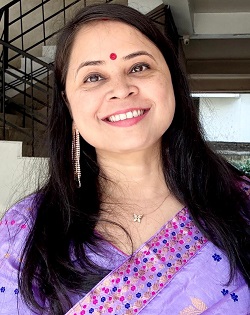
Dr. Namita Baishya
Dr. Namita is an accomplished Ayurvedic physician, academic, and award-winning Assamese writer whose work bridges medicine and literature. She completed her medical education at Government Ayurvedic Medical College, Guwahati, earned an M.S. in Surgery from the National Institute of Ayurveda, Jaipur, and a Ph.D. from Srimanta Sankaradeva University of Health Sciences.
A prolific storyteller, she has authored multiple short story collections, including Cha Aru Kichu Golpo, Herai Jowar Golpo, and Hitlarar Xesh 24 Ghanta, along with the novel Halodhia Ghehur Pothar Aru Ejak Kauri. Her writing is known for its psychological depth, philosophical undertones, and evocative use of imagery, often drawing from human experiences and lived realities.
Honoured with the Dr. Bhabendra Nath Saikia Memorial Award (2025), Dr. Baishya continues to explore themes of loss, memory, and inner consciousness, establishing herself as a distinctive voice in contemporary Assamese literature.