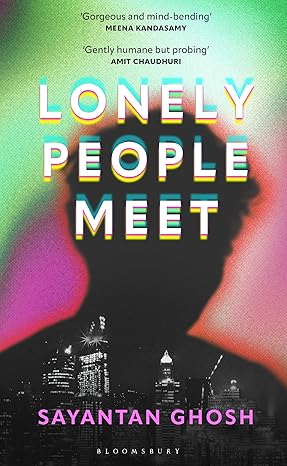
Some stories refuse to stay within boundaries. They slip between genres, moods, and expectations, asking readers not just to follow a plot, but to experience uncertainty. Lonely People Meet is one such novel—a genre-bending speculative thriller that merges psychological tension, emotional isolation, and unsettling “what ifs” into a narrative that feels both intimate and disquieting.
At its core, Lonely People Meet is a story about loneliness—not as a quiet sadness, but as a force powerful enough to shape choices, distort reality, and pull strangers into dangerous proximity. The book explores what happens when isolated lives intersect in unexpected ways, and how connection, when filtered through fear and desire, can become something far more complicated than comfort.
Loneliness as a Catalyst
Unlike thrillers driven purely by action or crime, this novel begins in stillness. Its characters are not immediately heroic or villainous; they are simply alone. That loneliness is not decorative—it is the engine of the story. The narrative suggests that isolation makes people porous, vulnerable to ideas and possibilities they might otherwise resist.
As the characters drift toward one another, their meetings feel inevitable yet uneasy. The title itself carries a quiet warning: when lonely people meet, the results are rarely simple. What begins as shared understanding slowly transforms into obsession, mistrust, and moral ambiguity.
Blurring the Line Between Reality and Speculation
What sets Lonely People Meet apart is its speculative edge. The novel does not rely on futuristic spectacle; instead, it introduces speculative elements subtly, allowing them to seep into the story almost unnoticed. This restraint makes the tension more effective. Readers are left questioning what is real, what is imagined, and what has been manipulated.
The speculative aspects heighten the psychological stakes rather than overpowering them. They serve as mirrors, reflecting the characters’ inner fractures and amplifying their fears. This blending of speculative fiction with thriller sensibilities creates a slow-burn unease that lingers long after each chapter ends.
A Psychological Thriller at Heart
Though genre-bending by design, Lonely People Meet is firmly rooted in psychological suspense. The tension is internal as much as external. Characters wrestle with guilt, longing, and self-deception, often becoming unreliable narrators of their own lives. The reader is constantly nudged to question motives and interpretations.
There are no easy heroes here. Every connection carries a cost, and every revelation complicates what came before. The novel excels at creating discomfort—not through shock value, but through emotional precision. Silence, pauses, and half-truths become as threatening as any overt act of violence.
Themes That Feel Uncomfortably Relevant
In an age defined by digital connection and emotional distance, Lonely People Meet feels unsettlingly timely. It examines how modern isolation can coexist with constant interaction, and how loneliness can thrive even in crowded spaces. The book raises quiet but urgent questions: How well do we really know the people we connect with? And how much of ourselves do we invent just to be seen?
The story also touches on power dynamics within relationships—who needs whom more, who controls the narrative, and who gets erased when things go wrong. These themes add emotional weight, making the novel resonate beyond its genre framework.
A Reading Experience That Demands Attention
This is not a book meant to be skimmed. Its impact lies in nuance, atmosphere, and gradual revelation. Readers who enjoy layered narratives, morally complex characters, and stories that reward patience will find Lonely People Meet deeply compelling.
The pacing is deliberate, allowing tension to accumulate naturally. By the time the story reaches its most unsettling moments, the reader is fully immersed—emotionally invested and slightly uneasy, unsure where sympathy should lie.
Why You Should Read It
Lonely People Meet is ideal for readers who enjoy fiction that challenges categorization. If you’re drawn to novels that blur the lines between thriller, speculative fiction, and psychological drama, this book offers a rewarding and thought-provoking experience.
It reminds us that loneliness is never neutral—and that when isolated lives collide, the consequences can be unpredictable, intimate, and profound.
Read more such articles on- Authors and Books