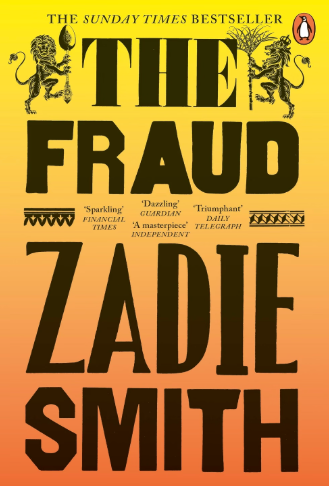
The Fraud by Zadie Smith: A Journey Through Truth, Identity, and Victorian England
What happens when truth becomes difficult to distinguish from deception? When identity is questioned, and society decides who deserves to be believed? These fascinating questions lie at the heart of The Fraud by Zadie Smith, a historical novel that explores class, race, identity, justice, and the complicated nature of storytelling.
Known for her sharp observations of society and her ability to create richly layered characters, Zadie Smith takes readers into Victorian England, where a famous legal case becomes the foundation for a broader exploration of human ambition, prejudice, and the stories people tell about themselves.
Published by Penguin Press in the United States, The Fraud combines historical events with imaginative storytelling, offering readers a thoughtful and immersive literary experience.
A Historical Story Inspired by Real Events
At the center of The Fraud is the famous Tichborne case, a nineteenth-century legal controversy that attracted enormous public attention in Victorian England.
The case involved a man claiming to be Sir Roger Tichborne, a wealthy heir who had disappeared at sea. His claim to the Tichborne inheritance sparked a lengthy legal battle and raised questions about identity, social class, memory, and the meaning of truth.
Zadie Smith uses this historical episode as a foundation for a novel that reaches beyond the courtroom. Rather than focusing exclusively on the legal dispute, she explores the lives and experiences of people connected to the case, creating a wider portrait of Victorian society.
The result is a story where personal relationships, social expectations, and historical circumstances intersect in unexpected ways.
A Novel About the People Behind History
One of the most interesting aspects of The Fraud is its attention to characters whose experiences might otherwise be overlooked.
The novel features Andrew Bogle, a formerly enslaved Jamaican man whose testimony becomes significant in the Tichborne case. Through his perspective, Smith examines the legacy of slavery, colonialism, and the ways race influences how people are perceived and believed.
Another important character is Eliza Touchet, a woman connected to the literary world who brings an observant and questioning perspective to the events around her.
Through these characters, Smith creates a narrative that moves beyond the traditional stories of powerful men and public institutions. The novel asks readers to consider whose experiences are remembered, whose voices are trusted, and how historical narratives are shaped.
Themes of Race, Class, and Identity
At its core, The Fraud explores the complicated relationship between identity and social power.
Victorian society was deeply influenced by class hierarchies, imperialism, and racial prejudice. These structures shaped people’s opportunities and influenced how their stories were received.
The Tichborne case provides Smith with an opportunity to examine these inequalities. The question of who can claim an identity—and who has the authority to confirm it—becomes especially significant in a society where social position often determines credibility.
Smith’s storytelling encourages readers to look beyond the surface of historical events. A legal dispute can also reveal deeper conflicts involving wealth, privilege, belonging, and the human desire to be recognized.
Zadie Smith’s Distinctive Storytelling
Zadie Smith is widely recognized for her literary fiction, including novels such as White Teeth, On Beauty, and NW. Her writing frequently explores relationships between individuals and the societies in which they live.
In The Fraud, she brings that interest to a historical setting.
The novel combines elements of historical fiction, literary drama, and social commentary. Its narrative draws attention to the contradictions of Victorian life, where intellectual developments and cultural achievements existed alongside exploitation, inequality, and rigid social structures.
Smith’s approach is particularly interesting because she doesn’t reduce history to a simple division between right and wrong. Instead, she presents characters with different motivations, perspectives, and limitations.
This creates space for readers to consider how people understand themselves—and how others choose to understand them.
Why Readers Should Explore The Fraud
Readers who enjoy historical fiction, literary novels, social commentary, and stories inspired by real events may find plenty to appreciate in The Fraud.
The novel offers an opportunity to explore Victorian England through a range of perspectives, connecting a famous legal case with broader questions about society and human behavior.
It also invites readers to think critically about historical narratives. What gets recorded as truth? How do social structures influence public opinion? And what happens when a person’s identity is defined by people with greater power?
These questions give the novel relevance beyond its historical setting.
Rather than offering a straightforward mystery or courtroom drama, The Fraud presents a more expansive literary experience that encourages readers to reflect on the relationship between storytelling and truth.
Read more such articles on- Authors and Books